

If you have a Texas traffic ticket, a missed court date, or a possible warrant, it is normal to feel worried. You may be asking yourself, “What do I do now?” or “Who can I trust?”
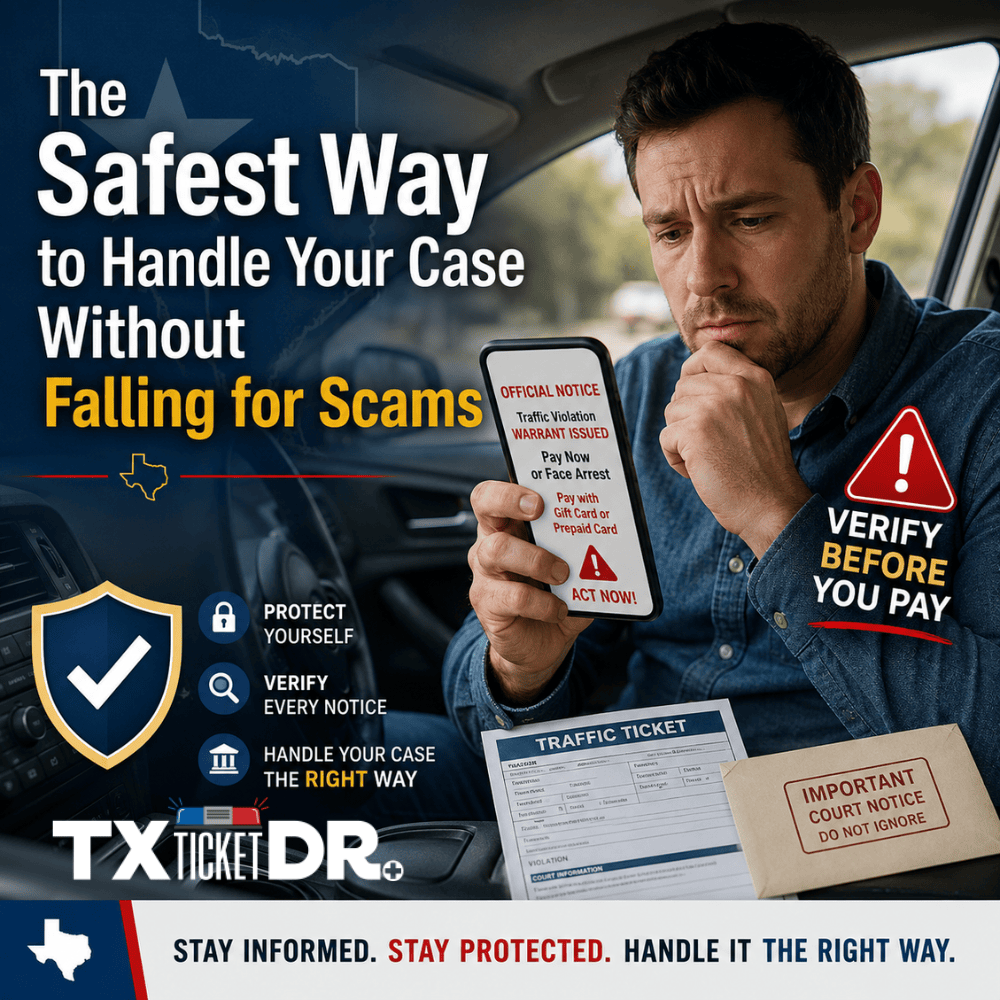
I understand that feeling. When someone is under pressure, it becomes much easier for scammers to exploit fear. They may call, text, email, or send a message that looks official. They may claim you owe money right now. They may even threaten arrest if you do not pay immediately.
Before you send money, click a link, scan a QR code, or give out personal information, take a breath.
The safest way to handle your case is to slow down, verify the source, and speak with someone who understands Texas traffic ticket matters. At The Texas Ticket Doctor, I help Texas drivers understand their options so they can take the next step with more confidence and less stress.
Why Texas Drivers Are Targeted by Traffic Ticket Scams
Traffic ticket cases can create real pressure. You may be worried about court dates, fines, warrants, insurance increases, a suspended license, or your CDL. Scammers know this, and they use fear to push people into fast decisions.
A scammer may pretend to be:
- A court clerk
- A law enforcement officer
- A collections agent
- A warrant division employee
- A government agency representative
- A fake attorney or legal service
Their goal is usually simple. They want money or personal information before you have time to check whether the demand is real.
The Texas Attorney General warns that scammers often ask for payment through hard-to-trace methods like gift cards, wire transfers, or other unusual payment options. Real organizations should allow normal, trackable payment methods.
Red Flags That a Traffic Ticket Message May Be a Scam
If someone contacts you about a ticket, warrant, missed court date, or fine, pay attention to how they communicate.
Here are warning signs that something may not be right:
- They demand immediate payment over the phone
- They threaten that you will be arrested today unless you pay
- They ask for gift cards, cryptocurrency, Cash App, Zelle, wire transfers, or prepaid cards
- They pressure you not to hang up
- They tell you not to call the court directly
- They send a suspicious link or QR code
- They ask for sensitive personal information before verifying who they are
- They use aggressive language to create panic
- They claim there is no time to speak with an attorney
The Federal Trade Commission has warned that courts do not request immediate payment over the phone and that scammers often demand payment via gift cards, payment apps, cryptocurrency, or wire transfers.
If you feel rushed, pressured, or threatened, stop before taking action.
What I Recommend Before You Pay Anything
If you believe you may have a traffic ticket, an unpaid fine, a failure-to-appear issue, or a warrant, do not ignore it. But do not panic either.
Here is the safer approach:
First, do not click links in unexpected texts or emails. A message may look official, but links can lead to fake payment pages or phishing sites.
Second, do not pay with gift cards, cryptocurrency, wire transfers, or payment apps because someone on the phone told you to. The FTC makes it clear that no real business or government agency will tell you to buy a gift card to pay them.
Third, verify the court or agency using a trusted source. Do not rely only on the phone number or link provided in the message. Look up the court separately or speak with an attorney who can help you determine where the case may be pending.
Fourth, contact legal help before making decisions that could affect your case. Depending on your situation, simply paying a ticket may have consequences you did not expect.
Be Careful With Online Ticket Payment Searches
Many drivers search online for phrases like “pay my ticket Texas,” “traffic ticket warrant lookup,” or “missed court date help.” Those searches may bring up a mix of official court pages, private companies, ads, and sometimes misleading sites.
Not every website that looks official is connected to the court. Some websites may charge extra fees, collect your information, or send you down the wrong path.
Before entering your name, driver’s license number, date of birth, or payment information, ask yourself:
- Is this an official court website?
- Does the website clearly identify the court or government agency?
- Is the payment method normal and traceable?
- Did I find this website myself, or was it sent by someone pressuring me?
- Should I speak with an attorney before paying?
When in doubt, slow down. A few minutes of caution can help you avoid sending money to the wrong place or making a decision that could hurt your case.
Why Paying a Ticket Too Quickly Can Be a Problem
I often speak with drivers who want the fastest way to make a ticket go away. I understand that. Nobody wants a traffic ticket hanging over them.
But paying the ticket immediately may not always be the best option. Depending on your case, payment could be treated as a plea. That may lead to fines, possible insurance consequences, license issues, or other complications.
This can be especially important if your case involves:
- A speeding ticket
- A CDL ticket
- No insurance
- Driving with a suspended license
- Failure to appear
- A warrant related to an unpaid ticket
- Multiple tickets
- An out-of-town Texas ticket
- A teen driver
Every case is different. That is why I encourage drivers to understand their options before paying anything.
How The Traffic Ticket Doctor Helps You Avoid Costly Mistakes
When you contact my office, my goal is to help you understand what you are facing and what steps may be available. I do not want you making decisions based on fear, pressure, or confusing information from a random phone call or website.
The Texas Ticket Doctor helps Texas drivers with traffic ticket matters statewide. Many cases can be handled remotely, which is helpful if you live far from the court, received a ticket while traveling, or have a busy schedule.
Depending on your situation, my office may be able to help with matters involving:
- Traffic ticket defense
- Speeding tickets
- CDL ticket defense
- Warrants related to unpaid tickets
- Failure to appear
- Driving with a suspended license
- No insurance tickets
- Red light tickets
- Dismissals, reductions, or deferred disposition
I cannot guarantee a specific result, and no attorney should promise an outcome before reviewing the facts. What I can do is help you take the next step with a clearer understanding of your options.
What to Do If You Think You Already Fell for a Scam
If you think you have already paid a scammer or shared personal information, act quickly.
Start by gathering what you have:
- Screenshots of texts or emails
- Phone numbers used by the caller
- Receipts
- Payment details
- Names they used
- Any links, QR codes, or documents they sent
If you paid with a gift card, contact the gift card company right away and ask if the funds can be frozen or refunded. The FTC recommends reporting gift card scams to the gift card company and to ReportFraud.ftc.gov.
You should also contact the real court or speak with an attorney to find out whether you still have an actual ticket, court date, or warrant that needs attention. A scam payment usually does not resolve a real court matter.
The Safest First Step Is to Ask Before You Act
If you are unsure whether a traffic ticket message, warrant notice, or payment request is real, do not let fear make the decision for you.
Ask questions before you pay.
Verify before you click.
Call before you panic.
A legitimate legal matter should be handled carefully, and a scammer’s favorite tool is urgency. When someone tries to rush you, that is often the moment to slow down.
Frequently Asked Questions About Traffic Ticket Scams in Texas
Be very careful with any call demanding immediate payment. Scammers often pretend to be connected to courts or law enforcement. Before paying anything, verify the matter directly with the court or speak with an attorney.
Gift cards, cryptocurrency, wire transfers, prepaid cards, Cash App, Zelle, and similar payment methods can be major warning signs when demanded by someone claiming to collect a court fine or warrant payment.
Not always. Paying a ticket may have consequences depending on the charge and your situation. Before paying, it is wise to determine whether you have options such as dismissal, reduction, deferred disposition, or another possible resolution.
Talk to The Texas Ticket Doctor Before You Make a Costly Mistake
If you are dealing with a Texas traffic ticket, a missed court date, a possible warrant, or a suspicious payment request, you do not have to figure it out alone. The safest move is to verify the situation and get guidance before sending money or making a decision that could affect your case.
Contact Dr. Lloyd A. Newton, The Texas Ticket Doctor, today for help with your Texas traffic ticket. Call 210-210-1616. Se habla español.
This article is for general information only and is not legal advice. Every case is different, so speak with a qualified attorney about your specific situation.

 The Hidden Risks of Handling a Warrant Without Legal Help
