

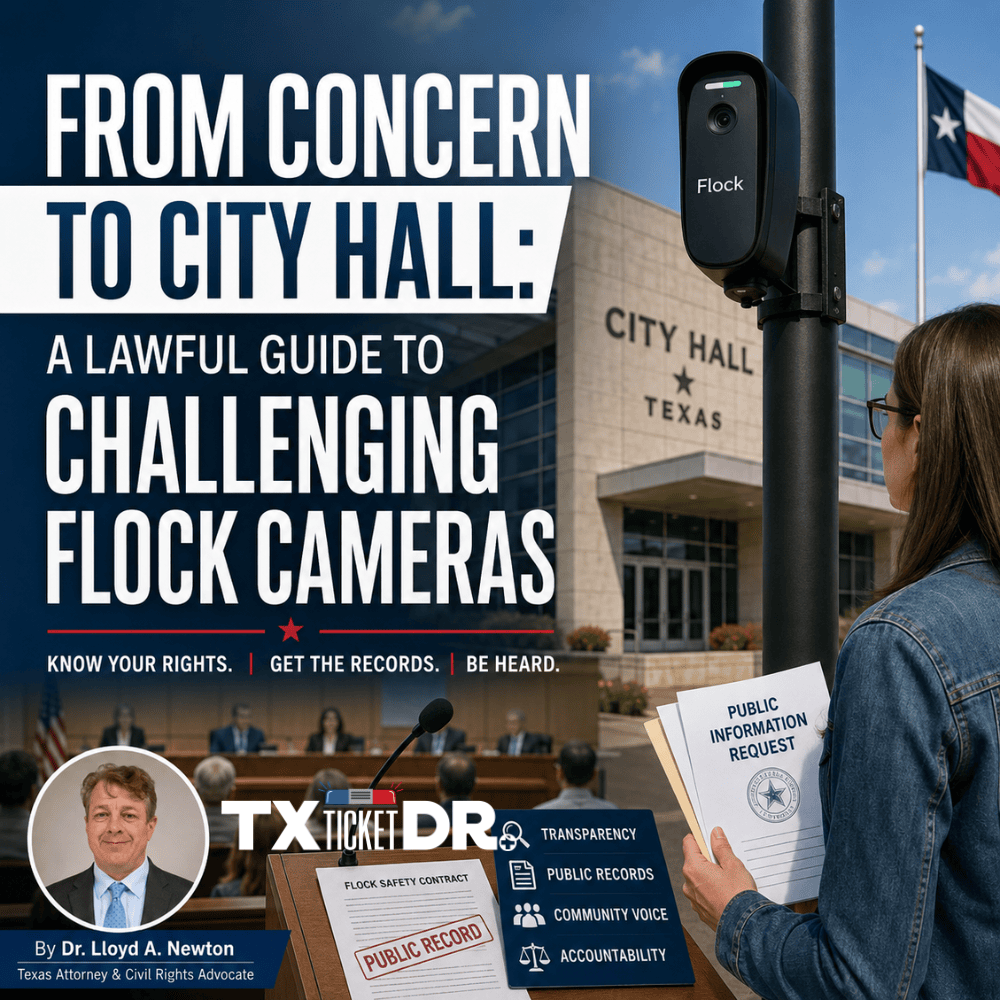
If your city or county has installed Flock cameras, you may have questions about what information they collect, who can search that information, how long it is stored, and whether residents had a meaningful opportunity to comment before the cameras appeared.
Those are reasonable questions.
Flock cameras, also known as automated license plate readers, can help law enforcement investigate stolen vehicles, missing persons, and serious crimes. At the same time, these systems may collect information about thousands of ordinary drivers who are not suspected of doing anything wrong.
You do not have to damage equipment, interfere with police operations, or break the law to challenge how these cameras are used. In fact, unlawful conduct can distract from legitimate privacy concerns and make meaningful reform more difficult.
As an attorney, I believe the strongest response is an informed, organized, and lawful one.
Understand What Flock Cameras Actually Collect
Before challenging a surveillance program, learn how it works.
Flock license plate readers generally capture images of vehicles traveling through a particular area. Depending on the system and its settings, the technology may identify details such as:
- License plate numbers
- Vehicle make and model
- Vehicle color
- Date and time
- Camera location
- Other visible vehicle characteristics
Flock states that its license plate readers are used by law enforcement agencies, neighborhoods, schools, and businesses. The company also says local customers decide how the technology is used and which organizations may access their data.
That local control is important because it means your city council, county commissioners court, police department, sheriff’s office, or homeowners association may have made decisions that deserve public review.
Start With Questions, Not Accusations
You may strongly oppose automated license plate readers. However, you will usually be more effective if you begin by asking specific questions.
For example:
- Who approved the cameras?
- When was the contract approved?
- How much does the program cost?
- Where are the cameras located?
- How long is vehicle data retained?
- Which agencies can access the information?
- Are searches audited?
- Can outside agencies conduct searches?
- What happens when a search is improper?
- Does the city publish usage reports?
- Will the contract automatically renew?
These questions move the discussion away from rumors and toward verifiable facts.
Your goal should be to understand the current policy before asking officials to change it.
Review City Council Agendas, Minutes, and Contracts
Search your city or county website for previous meeting agendas and minutes. Look for terms such as:
- Flock Safety
- Automated license plate reader
- ALPR
- Public safety cameras
- Surveillance technology
- Police equipment
- Camera subscription
- Crime prevention technology
Do not assume the word “Flock” will appear in the agenda. The purchase may have been described more generally as cameras, equipment, technology services, or a public safety contract.
Texas law generally requires meetings of governmental bodies to be open to the public unless a specific legal exception applies.
Meeting records may help you determine who proposed the program, what information officials received, how the vote occurred, and whether privacy safeguards were discussed.
Submit a Texas Public Information Request
The Texas Public Information Act allows people to inspect or obtain copies of many records maintained by governmental bodies. Some information may be withheld under an exception, but the law provides an important process for learning how local government operates.
You might request:
- The current Flock Safety contract
- Previous contracts and amendments
- Purchase orders and invoices
- Camera location lists or maps
- Department policies governing searches
- Data retention policies
- Agency sharing agreements
- Training materials
- Search audit reports
- Records of disciplinary action involving misuse
- Emails discussing the purchase or expansion
- Reports showing arrests, recoveries, or investigations connected to the cameras
Keep each request clear and reasonably narrow. A request for “every record involving Flock cameras” may create delays, high costs, or disputes over the scope.
Several smaller requests can be easier to process and harder to misunderstand. For example, request the contract first. Then request the written usage policy. After reviewing those documents, you can submit a more focused request for search audits or communications.
The Texas Attorney General provides information and a model request form for people seeking public records.
Check for a Flock Transparency Portal
Some agencies publish a Flock Transparency Portal. According to Flock, these portals may display policies, usage information, and search audits for the public.
A portal can be useful, but it should not automatically end your inquiry.
Compare the portal with the documents you receive. Ask whether the portal includes all searches, all participating agencies, current retention settings, and the complete sharing policy.
Transparency should provide meaningful information, not simply a public relations summary.
Organize Around Specific Policy Changes
A general demand to “stop surveillance” may express your concern, but officials need to know what action you want them to take.
Possible requests could include:
- Pause the purchase of additional cameras
- Hold a public hearing before renewal
- Publish all contracts and policies online
- Reduce the data retention period
- Restrict searches to defined criminal investigations
- Require a case number and documented reason for each search
- Limit access by outside agencies
- Prohibit use for immigration enforcement or other specified purposes
- Require regular audits
- Publish reports showing how the system is used
- Create penalties for unauthorized searches
- End the contract after an independent review
You do not have to support complete removal to demand stronger safeguards. Some residents may favor the cameras for serious crimes but oppose unrestricted access or broad data sharing.
A clear proposal gives elected officials something they can debate, revise, and vote on.
Speak Effectively at City Hall
Before attending a meeting, read the agenda and the city’s public comment rules. Some governmental bodies require speakers to register in advance or limit comments to a few minutes.
Prepare a short statement that includes:
- Who you are
- Why you are concerned
- One or two facts supporting your concern
- The specific action you want the council to take
Avoid personal attacks. Do not accuse an official of corruption or misconduct unless you have reliable evidence. Focus on the program, the contract, and the safeguards you believe are missing.
You might say:
“My name is Jane Smith, and I am a resident of this city. I am concerned that the current Flock camera policy does not clearly explain which outside agencies can search local vehicle data. I am asking the council to pause any expansion and require a public report on data sharing before renewing the contract.”
That statement is calm, focused, and difficult to dismiss.
Build a Credible Community Group
A well-organized group can accomplish more than scattered complaints.
Create a simple shared document containing:
- Verified facts
- Links to contracts and policies
- Upcoming meeting dates
- Public comment instructions
- Contact information for elected officials
- Your proposed reforms
- Tasks assigned to volunteers
Encourage supporters to remain peaceful and respectful. Do not trespass, tamper with cameras, obstruct roads, threaten officials, or encourage anyone to damage public or private property.
Vandalizing a camera may lead to criminal charges and shift attention away from the privacy issue you are trying to address.
Lawful advocacy keeps the focus where it belongs: accountability, transparency, and local control.
Ask Officials to Measure Both Benefits and Risks
Law enforcement may provide examples of crimes investigated with Flock data. Those examples deserve consideration.
Residents should also be allowed to ask:
- How many searches were conducted?
- How many searches contributed to arrests or recoveries?
- How many alerts were inaccurate?
- How many outside agencies accessed the system?
- Were any searches found to be improper?
- Could the same public safety goals be achieved with less data collection?
A fair review should consider both public safety benefits and privacy risks.
The issue is not simply whether the cameras have ever helped solve a crime. The issue is whether the scope of the system, the cost, the sharing network, and the safeguards are appropriate for your community.
Frequently Asked Questions About Challenging Flock Cameras
Can I ask my city to remove Flock cameras?
Yes. Residents can contact elected officials, speak at public meetings, submit petitions, request records, and ask the city to terminate or decline to renew a contract. Whether the city agrees will depend on local officials, contract terms, and community support.
Can I legally photograph a Flock camera?
A camera visible from a place where you are legally allowed to be may generally be photographed. However, do not trespass, touch the equipment, obstruct traffic, interfere with officers, or enter restricted property. The circumstances matter, so seek legal guidance if you are uncertain.
What should I do if I suspect someone misused Flock data?
Document what you know and avoid making unsupported public accusations. You may consider submitting a records request, filing a complaint with the responsible agency, contacting elected officials, or speaking with an attorney about the specific facts.
Turn Your Concern Into Lawful Action
You do not have to accept a surveillance program without asking questions. You also do not have to break the law to make your voice heard.
Research the program. Request the records. Attend the meetings. Organize your neighbors. Ask for clear safeguards. Give elected officials a specific proposal they can act upon.
Local government works best when informed residents participate.
Contact Dr. Lloyd A. Newton, Texas Ticket Doctor, today if you need help understanding a Texas legal matter. Call 210-210-1616. Se habla español.
This article is for general information only and is not legal advice. Every case is different, so speak with a qualified attorney about your specific situation.

 Texas Open Records Requests for Flock Camera Data: A Step-by-Step Guide